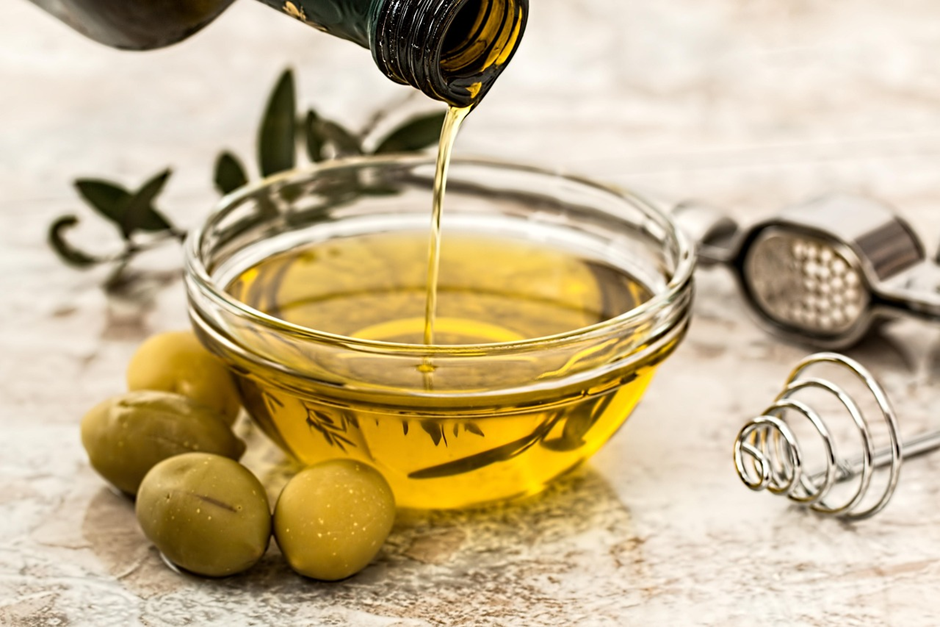

Olive (Olea europaea) is a traditional and nutritious fruit enjoyed worldwide, known not only for its taste but also for its health benefits. It is the source of a healthy oil, as well. Olive has been traditionally grown in Greece, Italy, Spain, North Africa, and the Middle East, and is now expanding broadly to different locations such as Australia. By changing the public habits to a healthier lifestyle, and as a result of export difficulties, vineyards are gradually being replaced by olive tree groves. This is a trend today in Australia, especially in South Australia.
The expansion of olive groves and, consequently, the table olive and olive oil processing industries will increase environmental burdens through the production of relevant waste materials and wastewaters. While table olives and olive oil are two healthful products, their production wastes are dangerous; so the right treatment technology is an obligation for having a sustainable activity.
As the olive industry grows, it brings environmental challenges, from changes in land use to the addition of insecticides, chemical fertilisers, and the production of different waste streams. Here, attention is directed toward the wastewater challenges encountered in the olive industry.
Olive mill wastewater
Among the various environmental concerns, wastewater management stands out as one of the most pressing challenges in the olive industry. Olive oil processors annually generate over 30 billion litres of wastewater [1]. Olive mill wastewater (OMW or OMWW) is a by-product of the olive oil production procedure. Whilst its composition can vary significantly, it is roughly composed of a high amount of chemical oxygen demand (COD) (up to 200 kg/m3), biological oxygen demand (BOD) (up to 100 kg/m3), heavy metals, acidity, phenols [2], and other organic compounds.
1 m3 of OMWW can be considered equivalent to 100-200 m3 of domestic sewage [3]. The high polyphenol content makes its colour black. As a result of its high strength, toxicity, and odorous nature, this black wastewater will destroy the environment if it is released without proper treatment. The problem arises when finding a low-cost, efficient treatment method becomes an issue.
How can OMWW be treated?
Different methods can potentially be used for OMWW treatment. Its purification using chemical methods has been widely investigated. Photocatalytic degradation, Fenton, and a combination of ozone and Fenton, which are all actually advanced oxidation techniques, have been tried for OMWW treatment. Hydrothermal carbonisation and electrocoagulation are some other instances of chemical treatments applied to OMWW.
Physical treatment processes such as liquid–liquid extraction, filtration, nanofiltration, and adsorption need fewer or no chemicals. Therefore, they seem to be more environmentally friendly choices for wastewater cleaning. The big issue with these methods is that they are unable to destroy the pollutants; they just transfer them from one phase to another. Flocculation, coagulation, and their combination are other examples of physical treatment [2].
Biological methods, including aerobic and anaerobic digestions, co-composting, and biopesticide treatment, can also be used for this purpose [2]. The advantage of this category of treatment methods is that they are largely nature-based and harness the power of natural bacteria and microorganisms to treat various types of wastewater, including OMWW.
Other methods, such as evaporation ponds, reverse osmosis membranes, thermal drying, phyto-depuration, and phenolic component extraction, have also been tried for OMWW treatment [4]. OMWW can be converted to biofuels and biofertilisers [1]. In a trial using a hybrid combined system of sand filtration and vertical flow constructed wetlands, 75-80% of pollution was reduced [5]. Treatment of OMWW can improve its pH from 5 to 8.1, reduce COD (53.3 to 4.5 g L-1), BOD (13.4 to 1.8 g L-1), and toxicity (99 to 30 % I B ) [6]. These figures demonstrate the enormous impact of the right treatment on reducing environmental pollution.
Conclusion
As Australia’s olive industry continues to expand, investing in sustainable wastewater treatment is not just a regulatory necessity—it’s a commitment to protecting our environment and ensuring the long-term success of this valuable sector.
While various OMWW treatment technologies have been investigated in research projects, choosing an economically viable process with the ability to meet the local standards is a challenge. Copying and pasting some general processes for all olive industries may be ineffective, causing poor outcomes that destroy both the environment and the reputation of the industry. Therefore, the expert advice is highlighted as an important tool that helps in selecting the correct treatment method.
Bibliography:
1. From Pollutant to Sustainable Product - Transforming Olive Mill Wastewater Available online: https://www.foodprocessing.com.au/content/sustainability/article/from-pollutant-to-sustainable-product-transforming-olive-mill-wastewater-797172176 (accessed on 22 August 2025).
2. Zahi, M.R.; Zam, W.; El Hattab, M. State of Knowledge on Chemical, Biological and Nutritional Properties of Olive Mill Wastewater. Food Chemistry 2022, 381, 132238, doi:10.1016/j.foodchem.2022.132238.
3. Tsagaraki, E.; Lazarides, H.N.; Petrotos, K.B. Olive Mill Wastewater Treatment. In Proceedings of the Utilization of By-Products and Treatment of Waste in the Food Industry; Oreopoulou, V., Russ, W., Eds.; Springer US: Boston, MA, 2007; pp. 133–157.
4. Shabir, S.; Ilyas, N.; Saeed, M.; Bibi, F.; Sayyed, R.Z.; Almalki, W.H. Treatment Technologies for Olive Mill Wastewater with Impacts on Plants. Environmental Research 2023, 216, 114399, doi:10.1016/j.envres.2022.114399.
5. Achak, M.; Boumya, W.; Elamraoui, S.; Asdiou, N.; Taoufik, N.; Barka, N.; Aboulkas, A.; Lamy, E. Performance of Olive Mill Wastewater Treatment Using Hybrid System Combining Sand Filtration and Vertical Flow Constructed Wetlands. Journal of Water Process Engineering 2023, 53, 103737, doi:10.1016/j.jwpe.2023.103737. 6. Al-Qodah, Z.; Al-Zoubi, H.; Hudaib, B.; Omar, W.; Soleimani, M.; Abu-Romman, S.; Frontistis, Z. Sustainable vs. Conventional Approach for Olive Oil Wastewater Management: A Review of the State of the Art. Water2022, 14, 1695, doi:10.3390/w14111695.